Google Business Profile optimization is most useful when it is treated as part of a complete customer-acquisition system rather than as a standalone tactic. This guide is written for local businesses that want a complete, trustworthy Google Business Profile. Its purpose is to improve profile completeness, relevance, accuracy and customer usefulness without spammy tactics. The target outcome is a profile that better supports local discovery, trust and conversion actions.
That distinction matters because digital marketing can look successful on a dashboard while underperforming in the business. Impressions, clicks, reach, followers and rankings can all be useful diagnostic signals, but none of them automatically equal revenue. A better process starts with customer intent, builds a relevant experience around that intent, and then tracks the actions that show genuine progress: calls, WhatsApp conversations, form submissions, store visits, appointments, orders or other qualified outcomes that matter to the business.
Start with the business goal, not the marketing tool
Before making changes, define what success should look like in business language. A local service company might need ten additional qualified enquiries per month, while a retailer may want more store visits, product orders or repeat purchases. A professional service may care more about fewer but higher-value consultations. When the outcome is clear, it becomes easier to decide which pages, search terms, campaigns, content and conversion actions deserve attention.
This also protects the budget. Without a defined goal, teams often add channels because they are popular: SEO, Google Ads, Meta Ads, social posting, video and email all at once. Each channel can be useful, but every extra channel creates work, creative requirements, tracking complexity and follow-up demand. A focused plan selects the activities that are most likely to influence the defined outcome, then expands only after the first system is measurable.
Build the right foundation first
The strongest approach starts with the foundation, because Google Business Profile optimization cannot be separated from the website, the customer journey and the way enquiries are measured. For this topic, the practical foundation includes accurate business name and primary category, correct address or service-area settings, current phone, website and opening hours, useful business description and service information and real photos and consistent review management. These pieces work together. Improving one while ignoring the others can produce misleading results—for example, more traffic without more qualified enquiries, or more leads without enough information to know which campaign produced them.
For local businesses that want a complete, trustworthy Google Business Profile, the priority is not to complete a random checklist. The priority is to identify the constraint that is currently preventing the next useful business outcome. If customers cannot discover the business, visibility is the constraint. If they arrive but do not enquire, the page or offer may be the constraint. If leads arrive but rarely convert, qualification or follow-up may be the constraint. This diagnostic mindset keeps marketing work tied to the real business instead of to isolated platform metrics.
Foundation checklist
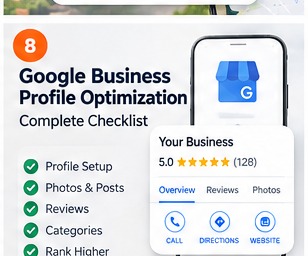
- accurate business name and primary category
- correct address or service-area settings
- current phone, website and opening hours
- useful business description and service information
- real photos and consistent review management
A practical step-by-step plan
The sequence below gives local businesses that want a complete, trustworthy Google Business Profile a practical way to move from diagnosis to execution. It is intentionally ordered so that measurement and relevance come before scaling.
1. Confirm the core identity and ownership details
Treat this as a decision point, not a box to tick. Document the reason for the change and what signal will tell you whether it helped. The objective at this stage is to move closer to a profile that better supports local discovery, trust and conversion actions without creating unnecessary complexity.
2. Choose the most accurate categories
Keep the scope narrow enough that you can measure the effect. If several major variables change together, it becomes difficult to learn what actually improved performance. The objective at this stage is to move closer to a profile that better supports local discovery, trust and conversion actions without creating unnecessary complexity.
3. Complete services, products and attributes that genuinely apply
Make the customer experience part of the test. A technically correct setup can still underperform if the wording, proof or next step is confusing. The objective at this stage is to move closer to a profile that better supports local discovery, trust and conversion actions without creating unnecessary complexity.
4. Add useful photos and keep operational information current
Use real enquiry data to refine the work. Search terms, lead notes and sales conversations often reveal language and objections that dashboards alone cannot show. The objective at this stage is to move closer to a profile that better supports local discovery, trust and conversion actions without creating unnecessary complexity.
5. Review performance, questions and customer feedback regularly
After implementation, review both quantity and quality. A smaller number of better-matched enquiries can be more valuable than a large volume of weak leads. The objective at this stage is to move closer to a profile that better supports local discovery, trust and conversion actions without creating unnecessary complexity.
A practical example
A local clinic profile should help a potential customer understand what the clinic offers, where it is located, when it is open and how to contact it. Adding unrelated categories or keyword-stuffed business names may create risk without improving the real customer experience.
The lesson is not that every business should copy the example. It is that the marketing setup should reflect the way the customer buys. High-intent searches usually need fast confirmation, specific service information and easy contact options. Earlier-stage discovery often needs more education, creative explanation or social proof. When the page, message and call to action fit the visitor's stage, both conversion rate and lead quality are easier to improve.
Common mistakes that reduce results
Most performance problems are not caused by one dramatic error. They usually come from several small mismatches between targeting, content, website experience and measurement. Watch especially for the following issues:
Adding keywords to the business name when they are not part of the real name.
Using incorrect categories to chase visibility.
Creating duplicate profiles for the same business.
Leaving holiday hours outdated.
Ignoring reviews and user-suggested edits.
When one of these problems appears, avoid responding with random changes. Trace the customer journey from discovery to conversion and identify where relevance or trust drops. Fix the earliest meaningful break first. For example, there is little value in rewriting a form if the campaign is attracting the wrong audience, and there is little value in increasing traffic if the landing page does not explain the offer clearly.
Measure what matters
A useful measurement system separates leading indicators from business outcomes. For this topic, watch profile views, website clicks, calls, direction requests where relevant and search queries and review growth. Some of these metrics explain what is happening before a sale; others show whether the work is creating real value. Looking at them together prevents a single attractive number from dominating the decision.
Measurement should also connect platform data with the actual lead record. If possible, note whether each enquiry was reachable, relevant, qualified and converted. That simple feedback loop can transform optimisation. A campaign with a higher cost per lead can be better if the leads close more often, while a page with lower traffic can be more valuable if it consistently attracts high-intent visitors. Use metrics to answer business questions, not to create reports that look busy.
Make the website part of the strategy
Marketing performance often depends on what happens after the click. Important pages should load quickly on mobile, use readable headings, explain the offer in plain language and make the next action obvious. Phone, WhatsApp and form options should be easy to use without covering the content. Add proof only when it is genuine: real project examples, accurate business information, clear policies, useful FAQs and customer reviews that actually exist.
For SEO, the website also needs a logical architecture. Important services should be reachable from navigation or contextual links, related articles should point to the relevant service page, and each page should have one primary intent. For paid campaigns, preserve message continuity from keyword or creative to landing page. The visitor should feel that the page is the natural answer to the ad or search result they just selected.
Apply the strategy to a local business context
Local businesses have an important advantage: relevance can be highly specific. The website can explain real service areas, local processes, availability, customer questions and buying considerations that large generic websites may not cover well. Use location terms naturally where they help the customer. Do not manufacture dozens of near-duplicate pages or repeat a town name in every sentence. Search engines and customers both benefit from clarity more than forced repetition.
For local businesses that want a complete, trustworthy Google Business Profile, this means keeping the online presence consistent. The website, Google Business Profile, ads and social profiles should describe the same business, services and contact details. If the customer sees conflicting hours, phone numbers, locations or offers, trust falls. A consistent local entity is easier to understand, easier to verify and easier for a potential customer to contact.
A simple 30-day improvement plan
Week 1 — audit: document the current setup, identify the pages or campaigns connected to Google Business Profile optimization, verify tracking, and note the biggest gap between traffic and qualified outcomes. Week 2 — fix foundations: correct inaccurate information, improve the highest-priority page, simplify the conversion path and resolve obvious technical or targeting problems.
Week 3 — improve relevance: refine copy, internal links, targeting, creative or profile information based on the customer questions you hear most often. Add one genuinely useful piece of supporting content if it fills a real gap. Week 4 — measure and decide: compare the new data with the baseline, review lead quality, and choose one or two next improvements. This rhythm creates learning without forcing constant change.
Frequently asked questions
How often should I update my Google Business Profile?
Update operational details whenever they change and review the profile regularly for accuracy, new reviews, suggested edits and outdated photos.
Do posts directly improve rankings?
Do not treat posts as a guaranteed ranking tactic. Use them because they can keep information current and help customers understand offers, updates or services.
Can I add multiple categories?
Yes when they genuinely describe the business. Choose the primary category carefully and use additional categories only when they accurately represent real services.
Turn the guide into action
Use this guide as a working framework rather than a one-time read. Start with the biggest constraint, make one meaningful improvement, and measure whether it changes qualified customer behaviour. Digitalford supports businesses with SEO, local SEO, Google Ads, Meta Ads, website design and lead generation. You can also review the portfolio or contact Digitalford to discuss the most relevant next step for your business.